
If you are considering veneers, you may want a brighter, more balanced smile while still looking like yourself. Natural-looking veneers are designed around how your teeth harmonize with your face. Tooth proportions, surface details, the way your lips frame your smile, and your preferences all contribute to the result.
At The Center for Cosmetic Dentistry in Smithtown, we consider appearance alongside tooth structure, gum health, and function. Understanding those factors helps us discuss whether veneers are appropriate and what changes would suit your smile.
Tooth Shape and Facial Harmony
Porcelain veneers are thin, custom-made restorations bonded to the visible surfaces of teeth. They can change tooth shape, color, size, and proportions. Planning those changes means looking at how the teeth relate to your facial features, lips, gumline, and surrounding teeth.
Tooth length, width, edge shape, and the amount of tooth visible at rest, during speech, and when smiling all matter. These relationships guide a design that suits your face. Subtle variations in contour and edge position can help teeth look lifelike without making every tooth identical.
Your preferences matter here, too. Some people favor softer, rounded edges; others prefer more defined shapes. Discussing what you like helps guide the design without assuming that every patient wants the same smile.
A Shade That Fits Your Goals
A bright smile can look natural. The choice depends on the shade you prefer, the surrounding teeth, and how the restorations look within your overall smile. There is no single shade that is right for everyone.
Natural teeth have depth and subtle color variation. Porcelain that is too opaque or lacks those details may look flat, even when the shade itself is appealing. Shade selection involves considering both brightness and how light passes through and reflects from the material.
If some natural teeth will remain visible, their color also needs to be considered. Whitening may be discussed before selecting the final veneer shade because veneers, crowns, and bonding do not whiten like natural teeth.
Texture and Translucency
Enamel has fine surface texture and varying translucency, especially near the biting edges. These details affect how teeth reflect light.
Our expert laboratory technicians help translate the planned design into porcelain, including surface texture, subtle shade variation, and translucency. These details are chosen to suit your smile. More texture or translucency is not automatically better.
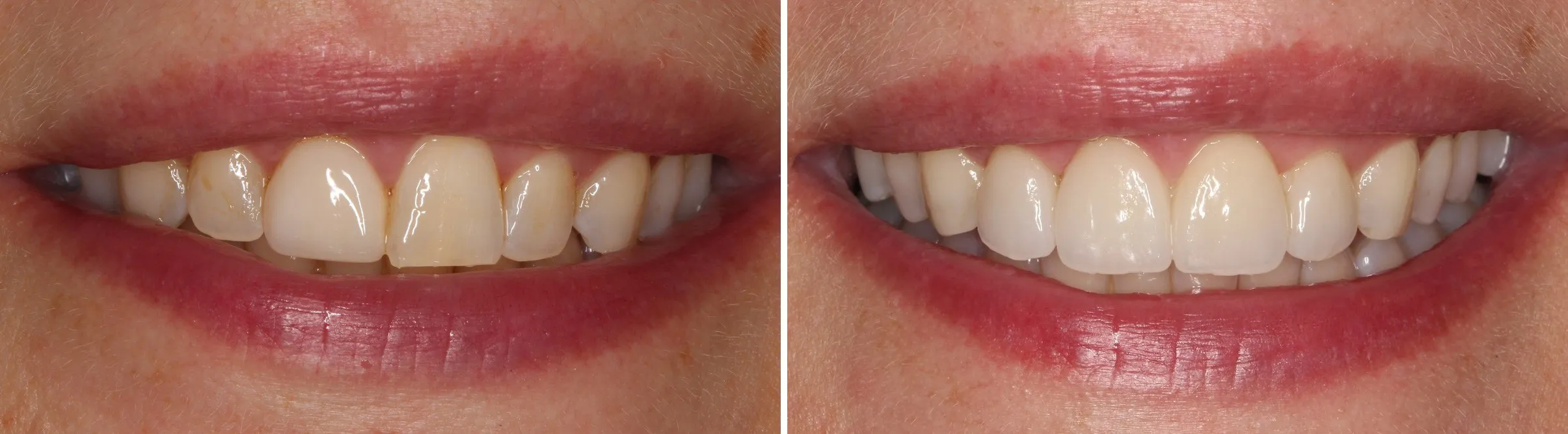 BeforeAfter
Healthy Gums and Appropriate Contours
The gums frame the teeth and influence their apparent length and balance. Inflammation, recession, or differences in gum position may affect both treatment planning and the final appearance.
Gum health should be evaluated before veneers. If a tooth looks short because of its gum position, changing the veneer alone may not address the concern. Depending on the cause, periodontal care, orthodontics, or gum reshaping may be considered. A natural-looking smile does not require every gum margin to be identical.
Veneer contours also matter. Adding material without adequate space can make teeth look or feel bulky and may make cleaning more difficult. The plan should consider the starting tooth shape and position, the space needed for porcelain, and how much tooth structure would need to be removed.
Tooth Position and Function
Crowded, rotated, or prominent teeth can limit what veneers alone can achieve conservatively. In selected cases, moving teeth with Invisalign or another orthodontic approach first may allow more appropriate proportions and less tooth preparation.
The bite also needs a separate functional assessment. Tooth contacts, jaw movements, existing wear, and grinding or clenching can influence restoration design and maintenance needs. Evaluating these factors helps identify risks; it cannot guarantee that veneers will never chip or need replacement.
Digital Planning and Your Preferences
Planning starts with what you want to change and what you want to preserve. You might prefer a subtle improvement, a brighter shade, or a change in tooth length. Examples of smiles you like can help communicate your preferences; the design still needs to suit your own facial features and oral health.
At The Center for Cosmetic Dentistry, our veneer cases are digitally planned in collaboration with our expert laboratory technicians. Together, we evaluate the proposed tooth shapes and proportions in relation to your face and smile. This collaboration connects the overall design with the fine details of the final restorations, while keeping your preferences, tooth structure, and function in view.
A diagnostic mock-up or the temporary/prototype restorations help assess proposed changes before the final veneers are completed. These previews may have limitations and are part of the planning discussion.
Whitening, bonding, orthodontics, or no treatment may also be reasonable options. Understanding those alternatives is part of deciding whether veneers fit your goals and the condition of your teeth.
Frequently Asked Questions
Do natural-looking veneers have to be a darker shade?
No. A brighter shade can still look natural when the proportions, contours, translucency, and surrounding smile work together. The aim is to choose a result you feel comfortable with after discussing the options.
How many veneers do I need for a natural-looking smile?
There is no fixed number. The plan depends on which teeth need treatment, how many show when you smile, neighboring tooth color and shape, and your goals. Sometimes one tooth can be treated; other cases 4 or more. Each recommendation should explain how the treated teeth will blend with your smile.
Will veneers feel like my own teeth immediately?
Some patients need time to adjust to changes in tooth shape or length. The goal is comfortable contours and function. Persistent bulk, difficulty speaking or cleaning, or a bite that feels wrong should be discussed with your dentist.
Explore Your Options in Smithtown
If you are considering veneers, a consultation at The Center for Cosmetic Dentistry is an opportunity to discuss the smile you want, review your oral health, and understand the benefits, limitations, and maintenance involved.
Schedule a cosmetic consultation to explore whether veneers or another option would suit your smile.
Individual results vary. A clinical examination is required to determine which treatments are appropriate for your teeth, bite, and gum health.